
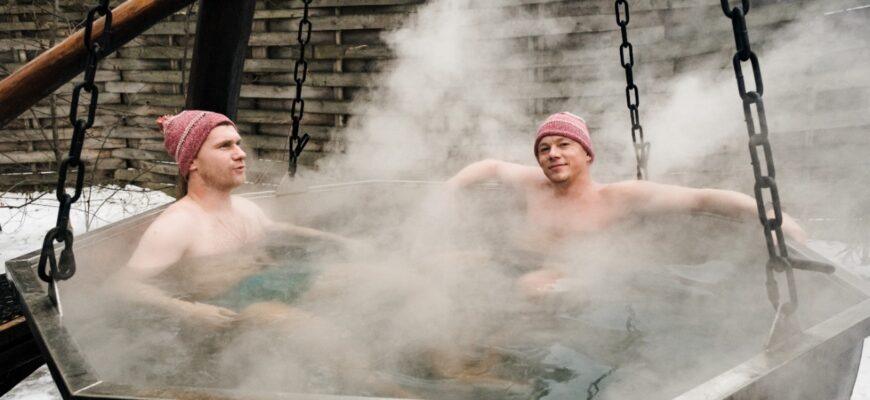
Have you ever noticed how invigorating it is to jump into an icy plunge pool after a hot sauna? Or how you feel after a contrast shower? Most of us perceive it as a pleasant spa ritual for stress relief. But behind it lies a powerful biohacking tool.
Cold water immersion and sauna sessions are more than just a way to toughen up. They’re a direct way to influence our gene expression and train our immune system at the cellular level.
Let’s look at how extreme temperatures literally “rewrite” our biological settings.
Genetic Reprogramming: Turning on the Right Switches
Our genes aren’t a hard and fast death sentence. Epigenetics —the science of how lifestyle and the environment can turn certain genomic regions on or off—plays a major role. Extreme temperatures are powerful triggers here.
1. Sauna and heat shock proteins (HSPs)
When you enter a heated sauna (usually 75°C or higher), your body experiences mild stress. In response, your cells begin to rapidly synthesize heat shock proteins (HSPs) .
- What do they do? HSPs act as “molecular repairmen.” They find damaged, misfolded proteins and restore their structure or recycle them.
- Longevity benefits: High levels of HSP protect the body from neurodegenerative diseases (such as Alzheimer’s and Parkinson’s), slow down cell aging, and increase the body’s overall resistance to stress.
2. Cold and cold shock proteins (e.g. RBM3)
When the body encounters cold (ice shower, ice hole, cryochamber), another set of genes responsible for the production of cold shock proteins is activated .
- What do they do? Research shows that the RBM3 protein promotes the protection and restoration of synapses in the brain. It helps neurons form new connections even under stress.
- Brain benefits: Cold literally stimulates neuroplasticity and protects the brain from cognitive decline.
Immunity Under Fire: How Hardening Trains an Army of Defenders
The human immune system is a complex army. Sauna and cold act like generals conducting rigorous military exercises for this army.
Sauna against viruses
Regular sauna use simulates a fever, the body’s natural defense against infection.
- Studies show that people who regularly visit a sauna have a 30–50% reduced risk of developing acute respiratory viral infections and pneumonia .
- When exposed to heat, the number of white blood cells (leukocytes, lymphocytes and neutrophils) increases , which patrol the body in search of viruses and bacteria.
Cold and white blood cells
Scientists from the Radboud Institute in the Netherlands have proven that people who practice cold exposure and breathing techniques can consciously influence their sympathetic nervous and immune systems.
- Cold immersion causes the release of adrenaline and cortisol, which initially suppress inflammation and then stimulate the production of interleukins and increase the number of circulating white blood cells .
- Simply put, regular cold exposure makes the immune system more alert and responsive.
Heart and Blood Vessels: Fitness for the Circulatory System
Both sauna and cold are passive cardio workouts.
- In a sauna , blood vessels dilate (vasodilation), and blood rushes to the skin to cool the body. Your heart rate rises to the level of a light or moderate jog (up to 120–150 beats per minute).
- In cold weather, blood vessels immediately narrow (vasoconstriction), pushing blood to the internal organs to conserve heat.
Alternating hot and cold (contrast therapy) causes the vascular wall to act like a pump: contracting and relaxing. This improves overall vascular elasticity, lowers blood pressure over the long term, and improves blood flow.
How to implement this into your life without harming your health?
Extreme temperatures are powerful medicine, and medicine should be used with caution. Here are some basic safety rules:
- Start small: Don’t jump into an ice hole or sit in a 100°C sauna right away. Add 30 seconds of cool water to the end of your morning shower. Gradually increase the time.
- Listen to your body: Mild discomfort is normal, but dizziness, nausea, or panic are signals to stop the procedure immediately.
- Hydration: Drink plenty of water before and after the sauna.
- Consult a doctor: If you have cardiovascular disease, hypertension, or are pregnant, be sure to consult a doctor before starting the practice.
Cold and sauna are ancient practices that today have strong scientific support. By changing our body temperature for just a few minutes a day, we activate ancient evolutionary mechanisms: we activate longevity genes, repair proteins, and strengthen our immune system.
Try to step outside your temperature comfort zone—your body will thank you with rock-solid health and a clear mind.