
Have you ever wondered why, while watching a certain movie, you suddenly start to feel uneasy, even though nothing scary has happened on screen yet? Or why one scene feels incredibly cozy, while another feels oppressive because of its sterility?
The secret often lies not in the actors’ performances or even in the screenplay, but in the director’s visual language. Film is first and foremost a visual language, and only then a literary one. Great directors speak to the audience on a subconscious level, using color, light, composition, and hidden metaphors.
Let's learn how to "read" movies properly and notice the things that slip by on the first viewing.
The Psychology of Color: More Than Just a Picture
Color in film is never random. Production designers and cinematographers spend hours selecting a color palette to evoke specific emotions in the audience.
- Red is the color of passion, danger, aggression, or love. Think of David Fincher’s films or Stanley Kubrick’s *The Shining*, where the red hotel hallway foreshadows madness.
- Blue and green are often used to evoke feelings of coldness, loneliness, alienation, or a high-tech feel (think cyberpunk and neo-noir thrillers).
- Yellow can symbolize madness, anxiety, or, conversely, nostalgia and warmth (depending on the shade).
An example of a master: Wes Anderson. His films are recognizable by their pastel, doll-like color palette. But behind the apparent naivety and symmetry of the frames often lies the melancholy and loneliness of the characters. For Anderson, color is a mask behind which pain is hidden.
Visual Metaphors: What Does the Screenplay Leave Unsaid?
In literature, a metaphor is a comparison. In film, a metaphor becomes a visual image.
- Reflections in mirrors and glass. If you see a character split in two by a reflection in a mirror or glass covered with raindrops, the director is telling you: “This person is torn! He’s either struggling with himself or lying to those around him.”
- Doorways and Cages. A character filmed through window bars, stair railings, or a doorway is subconsciously perceived by the viewer as a prisoner—whether in a prison, trapped by their own fears, or confined by social constraints.
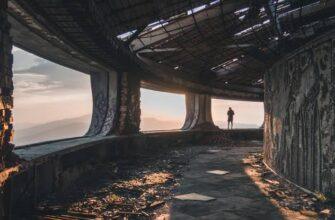
- Scale and Composition (Mise-en-scène). If a character occupies only a tiny portion of the frame, while a vast, empty interior or a desolate landscape looms around them, you feel their loneliness and insignificance without a single word of dialogue.
An example of a master filmmaker: Denis Villeneuve, in *Blade Runner 2049*, constantly uses gigantic statues and vast empty spaces to depict the tiny human figure in a futuristic world where the line between the artificial and the real has been blurred.
Distinctive Styles: How Directors Use Visual Language
Every great director has his or her own visual vocabulary.
- Christopher Nolan is obsessed with the themes of time and memory. His visual metaphors are mirror worlds (*Inception*), where the laws of physics are governed by the subconscious, and architecture bends along with the characters’ thoughts.
- Bong Joon-ho (“Parasite”) makes masterful use of vertical lines. In his films, the rich live upstairs (reached by an endless flight of stairs), while the poor live in semi-basements, where floodwater flows only from top to bottom. Social inequality is depicted through the physical arrangement of the characters in space.
- Martin Scorsese uses dynamics and color to convey the chaos in his characters’ minds. In *Taxi Driver*, the neon lights of nighttime New York are reflected in the wet windshield of the protagonist’s car, emphasizing his alienation from the “grit” of the big city.
How can you start “reading” movies on your own?
The next time you watch a movie, try asking yourself these three questions:
- What is the dominant color I see on the screen? Why did the director choose that particular color for this scene?
- Where is the camera positioned? Is it looking down at the protagonist (making him seem weak) or up at him (elevating him)?
- What's in the background? Sometimes an out-of-focus detail in the background reveals more about the story than the main dialogue.
Movies are an ocean of meaning, and watching them superficially is like reading a book while skimming only the dialogue. Learn to notice the details, and movies will reveal a whole new side to you!