Think back to your childhood. What did you do when you were bored? You built huts out of chairs and blankets, created fantasy worlds, argued with friends in the yard until you were hoarse about whose superhero was cooler, or spent hours staring at the ceiling, making up stories.
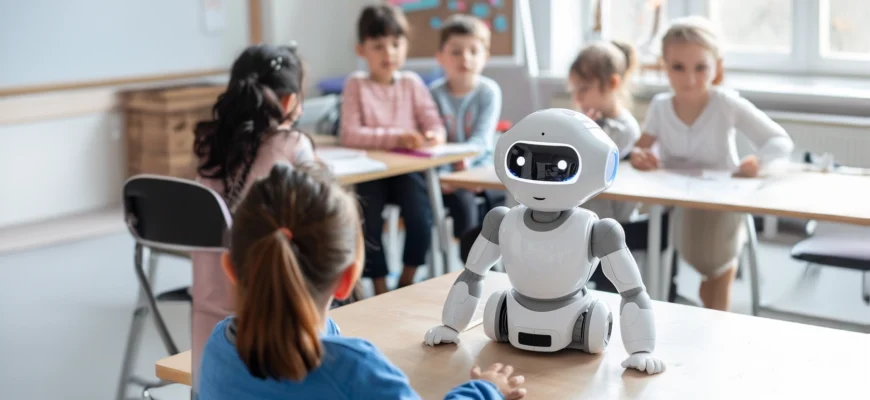
Now look at a modern child. If they’re bored, they instantly reach for a gadget. But while it used to be just cartoons or games, today everything has changed. Artificial intelligence has entered children’s lives.
AI companions, smart speakers, chatbots that generate stories on the fly, and virtual friends who are always ready to engage in conversation. These seem like ideal assistants for parents. But behind this apparent convenience lies a silent and dangerous epidemic: childhood addiction to artificial intelligence . And we will be dealing with the consequences of this crisis for decades to come.
Why is AI so dangerous for children’s psyche?
Adults use AI as a tool for work optimization. Children use it as… a surrogate for reality.
The perfect conversational partner who never argues. Real people are complicated. Friends in the neighborhood might get offended, refuse to play your game, or say something harsh. AI, on the other hand, is always polite, always available 24/7, and adapts to any child’s whims. Why learn to negotiate with peers when you have a silent digital slave who agrees with you on everything?
Decreased empathy and socialization skills. Children who become attached to virtual “friends” from an early age experience enormous difficulties in real-life communication. They fail to read nonverbal cues, cope with rejection, and resolve conflicts.
Critical thinking atrophy. Why bother straining your brain, learning spelling rules, or coming up with a plot for a school essay when a neural network can do it in three seconds? AI takes over the cognitive work, depriving the child of what matters most—the joy of overcoming challenges and independently finding answers.
Future Consequences: Where Are We Leading Generation Alpha?
If today’s children get used to placing their thoughts, emotions, and creativity on the shoulders of algorithms, then tomorrow we will have a society with very specific problems:
- Identity crisis and loneliness. Adults raised by bots will feel deeply lonely in the real world. They will lose the ability to build deep emotional connections, because real relationships require compromise, and AI hasn’t taught them that.
- Decreased creativity. If algorithms do people’s thinking from childhood, the neural connections responsible for creative thinking simply don’t develop. We could end up with a technologically advanced, but intellectually and creatively sterile society.
- Anxiety epidemic. Paradox: interacting with “perfect” AI makes children less resilient to stress. Exposure to the real, imperfect world will trigger panic and depression.
What should parents do?
It’s too late to panic, but we need to act now. Artificial intelligence isn’t going anywhere; it will become part of our lives. The question is who controls whom: the child controls the technology, or the technology controls the child.
- Set boundaries. AI is a tool (like a calculator or microscope), not a friend, a nanny, or a psychologist. Explain to your child the difference between a living person and computer code.
- Reintroduce boredom. It’s in moments of boredom that great ideas are born and the imagination gets going. Don’t rush to shove content into your child’s head at the slightest sign of idleness.
- Invest in analog experiences. Board games, sports, painting, phone-free walks, hiking, and face-to-face interaction with peers are not a relic of the past; they are a vaccine against digital addiction.
Artificial intelligence is humanity’s greatest achievement. But by entrusting it with the education of our children, we risk raising a generation that has forgotten how to be human.
Technology should expand human capabilities, not replace their soul. And preserving this balance is our primary task.