Do you remember the days when going to the movies or watching a film at home was a ritual? The lights would go out, we’d put our phones away (or, at best, switch them to silent mode), and we’d immerse ourselves completely in the story on the screen.
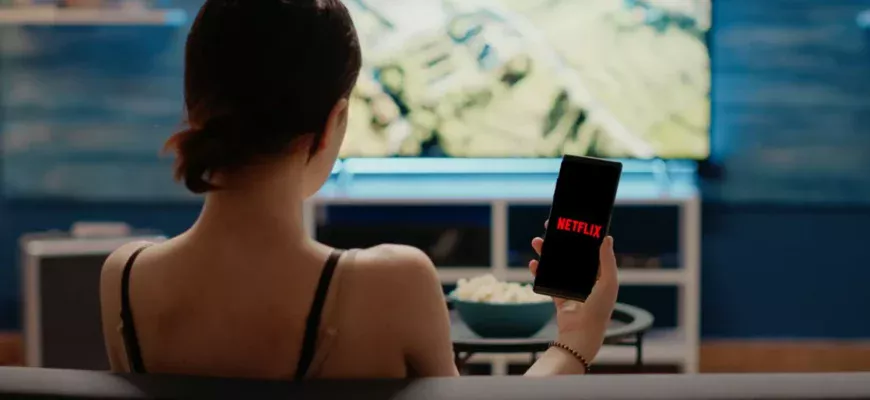
Today, things are different. The movie’s plot unfolds on the TV or computer screen, but every five minutes our attention drifts off to a parallel reality—the smartphone screen. We check social media, reply to messages, scroll through our news feed, or Google the name of a supporting actor.
This phenomenon has been dubbed the “second screen.” It has become so widespread that it is changing not only our content consumption habits but also the film industry itself. Let’s take a closer look at why this is happening and what the implications are.
Why do we reach for our phones during a movie?
At first glance, this seems absurd: why would you start watching a movie that interests you and then immediately get distracted by your phone? There are several psychological and sociological explanations for this:
- The “FOMO” (Fear of Missing Out) Epidemic: The fear of missing out has become a constant state of mind for modern people. We’re afraid of falling out of the information stream for even two hours. What if something important happens right now?
- Clip-Based Thinking and Dopamine Tolerance Modern social media platforms (TikTok, Reels, Shorts) have conditioned our brains to rapid changes in sensory input. If there’s a lull in a movie—a dialogue between characters or a slow scene with a landscape—the brain starts to get bored and craves its usual dose of dopamine from the vivid and fast-paced content on a smartphone.
- The Illusion of Multitasking We think we can do two things at once. We watch a TV show in the background while chatting in a work group chat. (Spoiler: Science has long proven that the brain isn’t “multitasking”—it simply switches quickly between tasks, sacrificing productivity and the quality of perception.)
- Social Viewing: Watching a movie today is an opportunity to discuss it right away. We tweet about new releases, send a meme to a friend who’s watching the same show, or read other people’s reviews on Kinopoisk to help form our own opinion.
The Dark Side of the “Second Screen”
The convenience and habit of constantly scrolling come at a price. And we’re the ones paying for it:
- The Demystification of Cinema. Directors spend months perfecting the framing, lighting, mise-en-scène, and soundtrack. When you watch a key moment in a movie through the gap between your fingers holding your smartphone, you miss the filmmaker’s visual language.
- Deterioration in memory and attention. Studies show that when using gadgets at the same time, the ability to remember storylines and details drops significantly. You might finish watching a season and, a week later, have a hard time remembering how it ended.
- Anxiety levels are rising. The brain doesn't rest when we're "relaxing" by watching a movie with our phones in our hands. We remain under work-related or information-related stress.
How is Hollywood adapting to us?
The industry cannot ignore this trend. Content creators are adapting to the fact that viewers get distracted.
- Simplification of the plot. Scripts are becoming more straightforward, and characters repeat important details aloud several times—just in case the viewer missed a key piece of dialogue while reading a message.
- Vibrant visuals. Movies (especially blockbusters from Marvel or Netflix) are made as high-contrast and dynamic as possible so that the images “grab” the viewer’s attention even when they’re watching TV with their peripheral vision.
How Can We Bring Back the Magic of Cinema?
If you feel like the “second screen” is taking away from your enjoyment of good movies, try taking a digital detox while you’re watching. Here are a few simple rules:
- "The Parking Rule." Put your phone in another room, or at least place it face down in the farthest corner of the couch.
- Use "Do Not Disturb" mode. If you need to keep your phone handy (for example, if you're waiting for an important call), turn off all notifications from social media and messaging apps.
- Start small. Try watching a short film or a 20-minute episode of a sitcom without your phone at all. Gradually increase the time.
- Accept the fact that it’s okay to get bored. Slow-paced arthouse films require patience. And that patience is rewarded with deep emotions that you simply can’t experience if you’re scrolling through your feed at the same time.