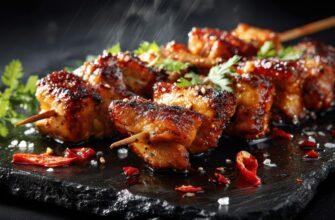

Today, street food is a global culinary trend, an integral part of hipster culture, and even a highlight in the Michelin Guide. We love grabbing falafel on the go in Berlin, tacos at Mexico City’s night markets, or Singaporean noodles from a star-rated food stall.
But have you ever wondered where this culture came from and what ethical transformations it has undergone? Spoiler: The journey from “food for the poor” to a gastronomic fetish was a long one, fraught with class prejudices and a struggle for survival.
Ancient Rome: Thermopolia and Fast Food in Antiquity
Street food didn't come about because people were living the good life. Its first consumers were the urban poor.
In Ancient Rome, most residents of apartment buildings (insulae) simply did not have the facilities to cook: open fires were prohibited in living quarters due to the constant risk of fire. The solution to this problem was the thermopolium—the ancient equivalent of modern fast-food outlets. Deep clay vessels (dolilia) were built into the counters to hold ready-to-eat hot food: lentil soup, stewed meat, olives, wine, and flatbread.
Ethical aspect: In ancient society, street food served as a clear social marker. Eating on the street signified belonging to the lower classes. A self-respecting Roman citizen ate at home. Street food was synonymous with unsanitary conditions, questionable food quality (leftovers from the tables of the wealthy were often used), and a marginalized lifestyle.
The Industrial Revolution: “Dirty” Carts and the Question of Survival
In the 19th century, with the onset of industrialization, cities in Europe and America were overflowing with workers. Factory workers needed a cheap and readily available source of energy right on the spot.
London was flooded with vendors selling oysters (which cost next to nothing at the time and were considered food for the poor), coal pies, and French fries. In New York, the first carts selling hot dogs and pretzels appeared.
Ethical Considerations: This raises the first serious ethical dilemma—consumer safety and hygiene. City authorities were extremely hostile toward street vendors. They were accused of spreading cholera, causing unsanitary conditions, and creating traffic jams.
Moreover, street food has long been stigmatized as “unclean” for racial and ethnic reasons as well. A wave of immigration brought exotic foods (Chinese, Mexican, Italian) to the U.S. and Europe, which were often criticized not only for their sanitary conditions but also simply for being “different.”
Asia: The Soul of Cities and the Informal Economy
The history of street food took a very different course in Asian countries—China, Thailand, Vietnam, and Singapore. There, street food was never a marginal phenomenon; it has always been the cornerstone of the national culinary tradition.
In Krighua, open-air food courts (hawker centers) have become hubs of social life.
Ethical Considerations: In the Asian context, street food is a matter of social inclusion and the economy of survival. For thousands of families, a cart selling noodles or rice was the only way to escape poverty and provide their children with an education.
However, Asian street food is now facing a new ethical challenge: gentrification. In recent years, the governments of many major cities (such as Bangkok) have been actively cracking down on informal markets in an effort to “gentrify” city streets for tourists, which is depriving thousands of small vendors of their livelihoods and traditions.
The 21st Century: Gentrification, Michelin Stars, and a New Ethos
How did street food become a cult phenomenon?
In 2008, the financial crisis hit the United States. Many high-end chefs found themselves out of work. They didn’t have the money to open restaurants, but they did have the skills. That’s how a new generation of food trucks was born—stylish, concept-driven vans serving signature dishes.
The culmination of this recognition was the story of Chan Hong Meng, the owner of a tiny stall called Hong Kong Soya Sauce Chicken Rice and Noodle in Singapore. In 2016, he received a Michelin star. Street food has officially been placed on par with haute cuisine.
The ethical paradox of modern street food:
- Cultural Appropriation vs. Respect: When an expensive restaurant serves tacos at the price of a steak, the question arises: Who is profiting from the traditional foods of marginalized groups?
- Affordability: Originally, street food was food for the poor. Today, a food truck serving signature burgers at a hipster festival can cost more than lunch at a traditional café. Street food is losing its accessibility.
- Environment: Plastic tableware, disposable cups, and packaging waste from food trucks cause enormous damage to the environment in cities.
Street food has come a long way from being a necessary evil in the slums of ancient Rome and the “dirty” food carts of the industrial era to becoming a trendy phenomenon of the 21st century.
Today, when we buy a taco from a Mexican vendor on the corner or pad thai at a Singaporean hawker center, we’re touching on the living history of human migration, the struggle for survival, and cultural exchange. And the modern ethics of street food are simple: respect those who prepare the food (by supporting small businesses rather than corporations), care for the environment (by avoiding unnecessary plastic), and remember that behind every serving of street food there is always someone’s personal story.