Imagine a spaceship flying in endless darkness. It has a strictly defined supply of water, oxygen, fuel, and hull strength. If the crew expends resources uncontrollably and ignores instrument signals, disaster is inevitable.
Our home, Earth, is structured in exactly the same way. In 2009, a group of eminent scientists led by Johan Rockström of the Stockholm Resilience Centre and Will Steffen formulated the concept of “Planetary Boundaries .” They identified nine key processes that regulate the stability and habitability of our planet. For each process, the scientists determined a safe threshold.
Fifteen years later, the news is grim: humanity has already crossed six of the nine boundaries. Let’s explore what these boundaries are, which ones we’ve already crossed, and what this means for our future.
Climate Change (EXCEEDED)
- Safe zone: up to 350 ppm (parts per million) of carbon dioxide in the atmosphere with a global temperature increase of no more than 1.5°C above pre-industrial levels.
- Reality: CO2 concentrations have already exceeded 420 ppm, and average temperatures are steadily rising. We see the consequences every day: abnormal heat waves, melting glaciers, and more frequent hurricanes and wildfires.
New Entity Pollution / “Chemical Pollution” (EXCEEDED)
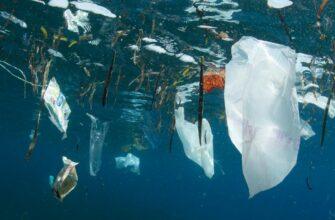
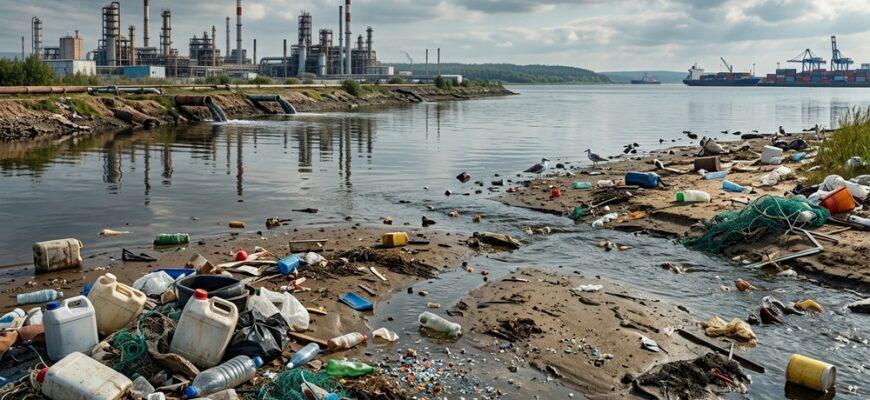
This boundary includes the appearance in the environment of substances that did not previously exist on Earth: plastic, synthetic chemicals, heavy metals, radioactive waste and pesticides.
Reality: Scientists confirm that this threshold has been breached by a wide margin. Microplastics are now found everywhere—from the Mariana Trench to human blood and placenta. The rate of chemical production significantly outpaces the ability of science and nature to assess their harm.
Biodiversity Loss (EXCEEDED)
Biodiversity is the planet’s “insurance.” The more animal and plant species there are, the more resilient ecosystems are to shocks.
Reality: The rate of species extinction is currently 100–1,000 times higher than the natural historical background. We are experiencing the Sixth Mass Extinction on Earth, and this time it is caused by human activity.
Disruption of biogeochemical cycles (nitrogen and phosphorus) (EXCEEDED)
Humans have learned to synthesize fertilizer from the air, making it possible to feed billions of people. But excess nitrogen and phosphorus are washed into rivers and oceans.
Reality: This leads to large-scale algal blooms, the formation of “dead zones” in the oceans (where nothing living can survive due to a lack of oxygen), and the destruction of freshwater ecosystems.
Land Use Change (EXCEEDED)
This mainly concerns the deforestation of forests (especially tropical forests in the Amazon basin and Southeast Asia) for agricultural purposes and cities.
Reality: Forests are the planet’s lungs and primary carbon sinks. By converting them to croplands and pastures, we not only destroy the habitats of animals but also deprive the Earth of its ability to regulate its climate.
Freshwater depletion (EXCEEDED – relatively recent)
Initially, this border was considered stable, but in recent years the situation has worsened.
Reality: Climate change and unsustainable agriculture are causing groundwater to dry up faster than it can be replenished. Water shortages are becoming a reality not only in Africa and the Middle East, but also in southern Europe and the United States.
What else? Three borders “on the way”
Fortunately, we haven’t exceeded three limits yet , but we’re teetering on the edge:
- Ocean acidification (by absorbing excess CO2, the oceans become more acidic, which kills coral reefs).
- Aerosol pollution (particles of dust and soot in the air that affect human health and the climate).
- Destruction of the ozone layer (here, by the way, there is a good example: thanks to the Montreal Protocol of 1987, humanity was able to stop the destruction of the ozone layer, and this boundary is gradually being restored).
Why are these not “ecologists’ horror stories” but economic reality?
The planetary boundaries concept is not a manifesto of radical activists. It is a rigorous scientific model designed to demonstrate that Earth has physical limits.
Exceeding these limits doesn’t mean a Hollywood-style apocalypse tomorrow. It means the system is becoming increasingly unstable and unpredictable . Each breach of these limits increases the risk of irreversible catastrophic changes (for example, the complete collapse of the Atlantic currents or the transformation of the Amazon into a savannah).
Is there hope?
Yes. The main advantage of the planetary boundaries concept is that it provides clear guidelines. We know exactly what ‘s going wrong.
The success with the ozone layer proves that humanity is capable of reaching agreements and changing the rules of the game when it recognizes the scale of the threat. Today, the transition to green energy, a circular economy, forest protection, and sustainable agriculture are not just catchy phrases from ESG presentations, but a matter of simple survival.
The planet won’t die—the planet existed for billions of years before us and will survive. The only question is whether it can remain a comfortable home for our species.