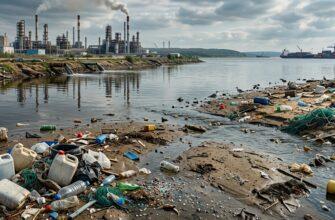
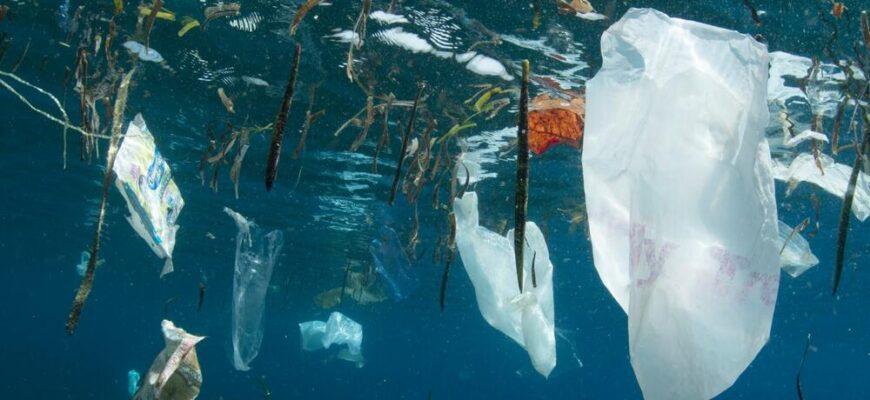
When we think of plastic pollution, we often imagine mountains of trash in landfills, plastic bottles floating in the ocean, or sad images of marine life. But the reality is much closer and more subtle than it seems.
Plastic isn’t disappearing—it’s just getting smaller. And today, scientists are documenting a disturbing trend: microplastics (particles smaller than 5 millimeters) have flooded not only the world’s oceans and soil, but also the air we breathe and the precipitation that falls from the sky.
How does microplastic rise into the atmosphere, travel around the planet, and ultimately end up in our food chain? Let’s find out.
Sky Plastic: Where Does It Come From in the Atmosphere?
Just a few years ago, microplastic air pollution was thought to be a problem confined to large industrial cities. However, recent studies show that plastic “pollen fall” is being recorded even in the most remote and pristine corners of the planet—in the Pyrenees, at the peaks of the Arctic, and deep within US national parks.
How do tiny polymer particles get into the sky?
- Road traffic: Car tires wear down on the asphalt every second. Millions of tons of rubber and plastic dust are kicked up into the air by the traffic.
- Ocean spray: Waves crashing on the shore create microscopic air bubbles. When they burst on the surface, they release microplastic particles directly into the atmosphere, where they are picked up by the winds.
- Agriculture and Landfills: Plastic mulch from fields, wear and tear on synthetic fabrics during drying, and wind erosion from landfills all send lightweight plastic fibers traveling on air currents.
These particles can travel thousands of kilometers before falling to earth as rain or snow. Scientists call this phenomenon “plastic rain.”
From Clouds to Ecosystems: The Path to the Food Chain
When microplastics fall to the ground or into water bodies along with sediment, they trigger a global bioaccumulation process. Here’s how this invisible toxin enters the food chain:
1. Soil and plants
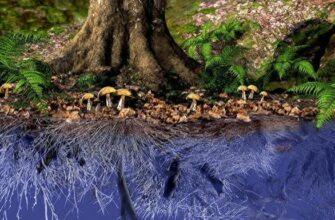
Precipitation irrigates fields, forests, and meadows. Microplastics settle in the soil, altering its structure and microbiome. It was long believed that plant root systems were too dense to absorb such large particles. However, recent experiments show that some plants are able to absorb nanoplastics (even smaller fragments) through microcracks in their roots and transport them into their stems and leaves.
2. Freshwater and marine inhabitants
Rain washes plastic particles from streets and soil into rivers, lakes, and oceans. Plankton, the foundation of aquatic ecosystems, perceive microplastics as food.
- Small crustaceans eat plastic.
- Smaller fish eat plankton.
- Predatory fish eat small fish.
At every stage of the food chain, the concentration of toxic substances not only persists but also increases. Furthermore, plastic acts as a “sponge,” attracting heavy metals, pesticides, and persistent organic pollutants, acting as a toxic “Trojan horse.”
3. Land animals
Livestock and wild animals drink water from contaminated reservoirs, graze on grass that has absorbed plastic from sediment, and inhale its particles. Consequently, traces of polymers are found in meat, milk, and eggs.
The end of the chain is man
We are the top of the food chain.
Research shows that the average person inhales and ingests tens of thousands of microplastic particles annually. We get them from fish and seafood, drinking water (even bottled), salt, honey, and animal meat.
Although the long-term impact of microplastics on human health is still being studied, it is already clear that they are not good for you. Particles can penetrate cell membranes, accumulate in organs, cause inflammation, and release toxic chemical additives (such as phthalates and bisphenol A), which disrupt the endocrine system.
What can be done?
The problem seems massive, and it can’t be solved overnight on an individual level. However, each of us can reduce the burden on the planet:
- Reduce your use of plastic: Especially single-use plastic.
- Choose natural fabrics: Synthetic clothing (polyester, nylon, acrylic) is the main source of microfiber in the air and water when washed.
- Use filters: Installing filters for washing machines and drinking water helps to retain a significant portion of microparticles.
The air we breathe and the rain that nourishes the earth are no longer pristine. Understanding how the plastic pollution cycle works is the first step to changing our attitude toward a material that will outlive us for hundreds of years.